
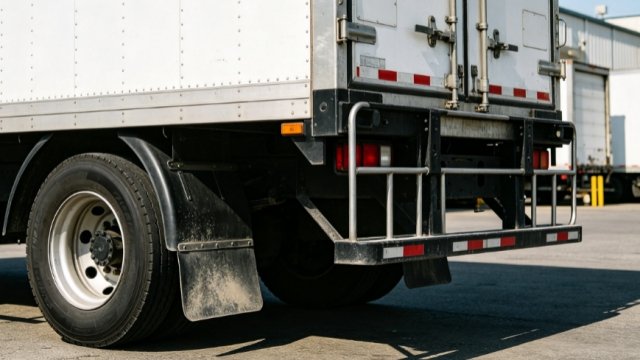
Mud flap sizing is one of those small decisions that becomes obvious only after the truck is back on the road. A panel that looks fine on the floor can sit too high, scrape when loaded, or pull against the hanger. For wholesalers and repair shops, the right size is the part that fits the vehicle in service, not just the number printed on the carton.
Height Is a Clearance and Coverage Decision
Mud flap height is the installed distance from the lower edge to the road. Buyers often ask for one simple number, but the honest answer starts with the truck itself. If the flap hangs too low, it scrapes and tears. If it sits too high, the tire can still throw spray under the panel.
State and local rules may set specific expectations for certain vehicles, so a shop needs to confirm the requirement before trimming or mounting new flaps. In everyday wholesale support, the picture is more useful than the slogan: cover the tire spray zone, but leave enough clearance for loading, suspension movement, and ramp travel.
Ground clearance
Ground clearance works best as an installed check. An empty trailer can ride differently from a loaded one, and suspension height changes the lower edge. A bench measurement helps the counter conversation, but it cannot replace a quick look at the truck after the flap is mounted.
Tire coverage
Tire coverage is easiest to judge from the rear because that is where following traffic sees the spray pattern. The flap needs enough width and drop to cover the tire path. It also needs room to move without catching, folding, or rubbing through early.
| Sizing point | What to check | Why it matters |
| Height | Lower edge after installation | Balances spray control with road clearance |
| Length | Distance from mounting strip to lower edge | Determines whether the flap reaches the needed zone |
| Width | Coverage across the tire area | Reduces gaps that throw spray outward |
| سمك | Panel stiffness and wear life | Affects durability in heavy service |
Length Should Follow the Vehicle Setup
Mud flap length becomes clearer when the buyer starts at the mounting point. A long flap mounted high may finish at almost the same road clearance as a shorter flap mounted lower. Vehicle layout beats the size label when the goal is a clean installed result.
Wholesale buyers comparing truck mud flap length requirements need three facts before recommending a part. Where does the hanger or strip sit? How much rear overhang does the vehicle have? Is the customer replacing a standard flap or building for harder service? Those answers do more work than a generic size chart.
- Measure from the mounting point to the desired lower edge.
- Confirm that the flap width covers the tire path.
- Leave enough clearance for loading conditions and road movement.
- Match thickness to service severity and customer expectations.
Common Sizes Help Stock Planning
Truck mud flap sizes cluster around familiar width and length combinations, especially for North American semi trucks and trailers. That does not make sizing automatic. It does make stock planning less random, because common sizes let repair shops answer urgent requests without waiting for a special order.
A buyer evaluating US TRUCK GOAT truck mud flap sizes can treat 24-inch width as a practical reference point. Lengths such as 24, 30, and 36 inches appear in common mud flap programs. US TRUCK GOAT offers black mud flap options in 24 x 24, 24 x 30, and 24 x 36 inch configurations, with model thicknesses from 3 mm to 7 mm.
Standard replacement demand
Standard replacement demand usually comes from worn panels, torn mounting holes, or missing flaps after rough service. Repair shops need fast identification, especially when the truck is blocking a bay. Clear size labels, compatible strips, and familiar packaging reduce wrong picks.
Heavy service demand
Heavy service demand often points buyers toward thicker flaps, stronger hangers, and stable mounting hardware. A thicker panel may improve wear life. It still has to fit the hanger, fastener pattern, and final ground clearance. Tough material cannot rescue a poor fit.
Mounting Hardware Protects the Size Choice
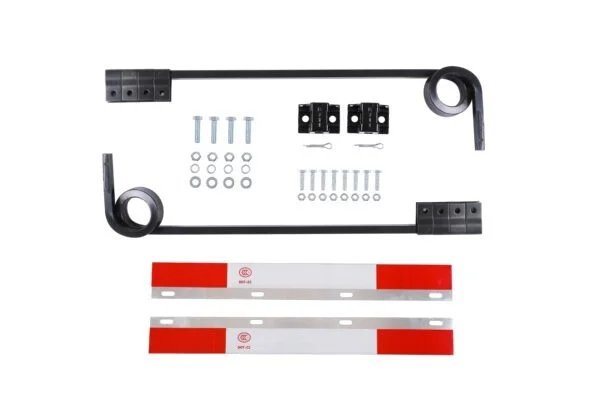
A correct flap size can still perform poorly if the hanger bends or the mounting strip loosens. Hardware is what keeps the selected height and length where the buyer intended. On semi trucks, vibration, weather, and repeated loading cycles expose weak support quickly.
Repair shops often pair a semi truck mud flap hanger range with new panels when old parts show corrosion, distortion, or bolt-hole damage. Replacing only the rubber panel may save a small amount today. Weak hardware can pull the new flap out of alignment and bring the same corner back into the bay.
Summary
The right mud flap size comes from installed height, effective length, tire coverage, thickness, and hanger condition. Trade buyers should treat size as a field-fit decision rather than a label on a carton, then stock the common sizes and hardware that solve recurring repair needs.
When your repair shop or wholesale catalog needs a clearer size plan, you can review the right mud flap size mix before building the next order.
أسئلة متكررة
What is the correct mud flap height from the ground?
The correct height depends on state rules, vehicle type, and loaded position. Shops should measure the installed flap on the vehicle rather than relying only on loose part dimensions.
How long do truck mud flaps have to be?
Mud flap length should reach the needed coverage zone from the actual mounting point. A longer flap is not automatically better if it drags or catches during service.
What truck mud flap sizes are common?
Common mud flap sizes include 24 x 24, 24 x 30, and 24 x 36 inch formats for many heavy truck applications. Buyers should still confirm width, mounting pattern, and thickness.
Does mud flap thickness matter?
Thickness matters because it affects stiffness, weight, and wear life. Heavy service can justify a thicker flap when the hanger and fasteners can support it.
Should mud flap hangers be replaced with the flap?
Mud flap hangers should be replaced when they are bent, loose, corroded, or unable to hold the flap squarely. Good hardware protects the selected size and installed clearance.
المشاركات الأخيرة

Truck Mud Flap Height and Size Requirements
سبتمبر 24, 2026