

A fleet can use reflective lettering and still need a separate material for its required conspicuity markings. The difference is easy to miss when both products look bright under a light. For a distributor or repair shop, the useful question is what the film must do on that vehicle. A branding graphic, a red-and-white marking strip and a reflector plate each need a specification suited to the intended application.
The job determines the reflective material
Reflective graphics make a name, logo or design visible when illuminated. Required conspicuity markings serve a defined vehicle-marking function under the applicable standard. The fact that a graphic reflects light does not establish that it meets that standard.
Commercial vehicle reflective tape should therefore be selected by its stated application and verified specification. “Premium,” “high intensity” and a familiar manufacturer name do not identify every requirement. Ask for the exact product series, color and construction being offered.
The same approach applies when evaluating a 3M product or another established manufacturer’s film. A brand offers a range of materials for different uses. The product identifier and its current technical documentation are what allow the buyer to assess suitability.
Reflective lettering and graphics
A film suited to cutting letters may be useful for fleet branding. That use does not automatically qualify the finished letters as required conspicuity markings. Review the graphic’s purpose and keep any required marking system separately identified.
Regulated conspicuity markings
Vehicle reflective marking needs material and installation that satisfy the applicable rule. Reflective sheeting for truck and trailer markings cannot be approved for a job simply by comparing how bright two samples look in a workshop.
What DOT C2 identifies
FMVSS No. 108 specifies grades of retroreflective sheeting used for conspicuity systems. S8.2.1.2 identifies DOT-C2 sheeting at no less than 50 mm wide, DOT-C3 at no less than 75 mm and DOT-C4 at no less than 100 mm. These are specific grades, not a general label for all reflective vinyl.
The marking requirement also matters. Under S8.2.1.3, the appropriate DOT-C2, DOT-C3 or DOT-C4 certification marking must appear on the exposed surface as specified. For alternating material, it appears at least once on each red or white segment; white-only material has a specified repetition interval.
A printed code should be connected to an identifiable product and manufacturer. For purchasing purposes, request the exact material reference and supporting documentation. A photograph of a code is not enough to assess every claim made about an untraceable roll.
| Material being considered | Intended role | Evidence to check |
| Reflective graphic film | Fleet lettering or branding | Suitability for the graphic and substrate |
| Conspicuity sheeting | Required vehicle markings where applicable | Correct grade, marking and technical documentation |
| Film on an aluminum plate | A mounted reflective assembly | Film specification, plate fit and installed position |
| Conspicuity reflex reflector | A separate permitted device type | Applicable device certification and installation |
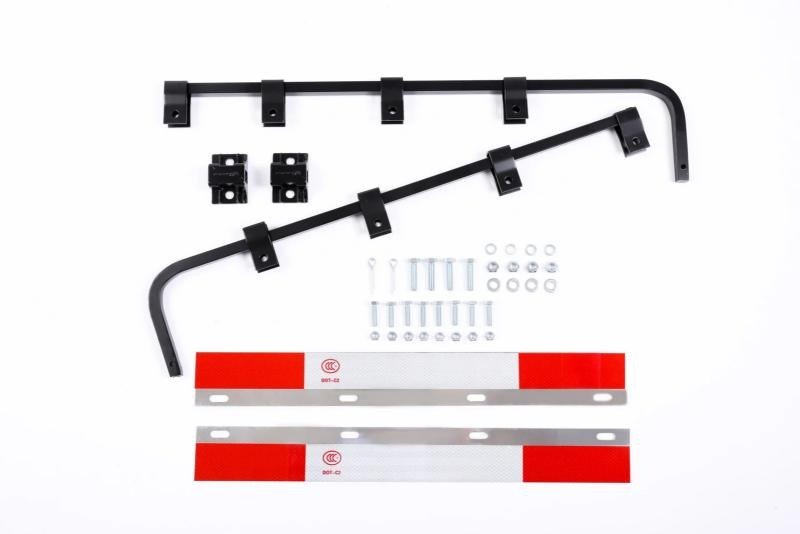
Film and mounting plate are separate choices
A reflective plate combines a surface material with a physical carrier. The carrier helps establish where the material can be mounted, while the film provides the reflective function. Evaluating one does not settle the suitability of the other.
The XKJ-MFS-Q24AL aluminum alloy reflector plates provide a specific product reference for that discussion. Do not infer a film grade or test result from the aluminum material description. Those details need their own confirmation.
The plate also needs to fit the intended attachment. Check the mounting holes, orientation and available space before treating it as a replacement. A compliant film on an unsuitable carrier would still leave a problem with the completed installation.
The substrate and application conditions matter
Film selection includes the surface it will be applied to. A rigid metal plate, painted body panel and flexible flap present different installation conditions. Use the film manufacturer’s approved substrates and preparation instructions to establish suitability.
Distributors supplying mounted accessories need to identify that surface before approving replacement film. شاحنة الماعز الأمريكية offers aluminum reflector plates alongside mud flap hanger products. Confirm the exact plate, reflective material and mounting application when the intended use involves a regulated marking.
Application instructions should identify the required surface condition and temperature range. Keep those instructions with the chosen material so the workshop does not improvise a cleaning solvent or application method from experience with another product.
A sample application can help assess handling and physical fit. It does not replace the evidence needed for regulatory performance. Keep the practical application check and the material’s certification separate in the approval record.
For an existing assembly, identify what failed before ordering replacement film. Peeling edges, a bent carrier and an unsuitable mounting position call for different corrective work. Replacing the visible surface alone may leave the reason for the problem unresolved.

A material approval that the workshop can follow
A distributor’s product description should let the installer identify what was approved. Broad phrases such as “reflective truck tape” leave too much uncertainty when the fleet uses several materials for different purposes.
Keep a short, specific approval record:
- Identify the exact film series and intended use.
- Record the required color, width and certification marking.
- Confirm the substrate and application instructions.
- Identify any separate plate or mounting hardware.
Where the job involves an assembled accessory, the mud flap reflector strips range can be reviewed by product reference. Ask which material is supplied with the selected item rather than extending one model’s claim across every strip or plate.
The installer also needs the applicable placement requirements. Correct material does not determine the location, orientation or amount needed on every vehicle. Those decisions follow the vehicle classification and the relevant marking provisions.
Additional graphics should not impair required lighting equipment. FMVSS No. 108 addresses impairment in S6.2.1. Review the completed graphic and marking layout together, particularly where a new design occupies space near lamps or existing reflective devices.
An exact specification prevents the wrong substitution
Choose reflective graphics for the graphic’s job and verified conspicuity material for a required marking. Confirm the carrier and application separately. This gives the fleet a usable specification instead of a general request for the brightest or most expensive film.
For reflector-plate and mounting options, contact us with the intended vehicle application and the reflective-material specification that needs to be matched.
أسئلة متكررة
Can reflective cut vinyl replace DOT C2 tape?
Only material that meets the applicable requirements can serve the required conspicuity function. A film’s suitability for cutting graphics does not establish that qualification.
Is every reflective film from one manufacturer equivalent?
No. Identify the exact series and intended application. A manufacturer’s name alone does not confirm the grade, substrate compatibility or certification of a particular film.
Does an aluminum reflector plate establish DOT compliance?
The plate material alone does not. Assess the reflective material, the mounting arrangement and the applicable vehicle requirements before making a compliance claim.
Is the brightest sample always the right choice?
A visual comparison under one light cannot establish all required performance. Select the verified specification and appropriate application, then review practical installation conditions.
What should a wholesaler request before approving a substitute?
Request the exact replacement product reference, applicable certification information and application instructions. Confirm that any change also works with the intended substrate and carrier.
المشاركات الأخيرة

Reflective Film for Fleet Graphics and DOT Markings
نوفمبر 12, 2026