

A truck can look ready from the rear and still raise questions at an inspection lane. Mud flaps, brackets, and reflectors sit low, take abuse, and vary by vehicle use. For fleets, dealers, and repair shops, the working question is simple enough: will this truck control spray, keep its rear hardware secure, and satisfy the rules on the route it actually runs?
The Requirement Depends on Vehicle Type and Route
Mud flap compliance sits in a practical space between road spray, equipment condition, and local enforcement. Federal commercial vehicle rules focus strongly on safe equipment, lamps, reflective devices, and rear protection. Many flap details, however, come from state rules or inspection habits. A city delivery truck and an interstate semi trailer may not be judged in the same way.
State wording can be messy. One rule may say mud flaps, another may say splash guards, fenders, or wheel covers. A buyer searching US TRUCK GOAT semi truck mud flap support is really looking at a rear equipment group, not one magic national dimension. A useful wholesale plan covers the parts people replace under pressure: flaps, brackets, hanger bars, strips, bolts, and reflective pieces.
Federal checks
Federal Motor Carrier Safety Regulations give inspectors a framework for safe vehicle condition and required lighting or reflective equipment. They do not make every mud flap question a single federal height rule for every truck. That distinction matters at the sales counter because a confident but wrong DOT answer can send a fleet in the wrong direction.
State checks
State rules commonly care about spray, tire coverage, and debris thrown toward following traffic. Fleet buyers need the operating states, axle layout, trailer type, and inspection expectation before they call one flap length correct. The answer may be boring, but it saves the customer from buying the wrong part twice.
| Buyer question | Practical answer | Stock implication |
| Is a mud flap needed? | Check the vehicle class and operating states. | Carry common truck and trailer sizes. |
| Is the existing flap acceptable? | Inspect damage, ground clearance, and missing hardware. | Stock flaps, strips, and replacement bolts. |
| Can one rule fit every customer? | No. State language and inspection practice vary. | Offer fitment guidance by truck type. |
Inspection Risk Starts With Condition
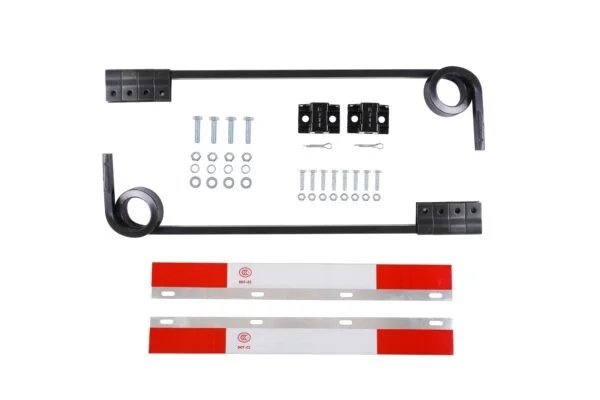
A mud flap can be present and still be a problem. Torn mounting holes, a crooked lower edge, or a missing support bar all change how the part performs behind the tire. Inspectors and repair shops notice equipment that swings, scrapes, or leaves the tire area exposed. For wholesalers, the hardware often matters as much as the rubber panel.
A quick inspection works best when it follows the job the flap is supposed to do. Look at position, effective length, hanger rigidity, and reflector visibility before the truck goes back out. That kind of check avoids selling parts the customer does not need while still catching the failures that cause downtime.
- Confirm that the flap is mounted squarely behind the tire area.
- Check that mounting holes are not torn or stretched.
- Look for loose bars, missing fasteners, bent brackets, or corrosion.
- Replace reflector strips or plates when rear visibility is reduced.
Distributors Need Parts That Match Real Repairs
Wholesale buyers usually serve several customer types from the same shelf. A repair shop wants the hanger, strip, and fasteners without a long search. A fleet buyer wants repeatable fit and fewer comeback repairs. A dealer wants enough variety to answer common requests without burying cash in slow stock.
A balanced commercial mud flap requirements inventory includes standard black flaps, reflective options, hanger brackets, mud flap strips, and anti-sail accessories. The exact mix depends on the trucks served. The logic stays steady: keep the common failure points available before the customer is standing at the counter with an inspection deadline.
Repair shops
Repair shops benefit from paired hanger sets and compatible hardware because labor time disappears quickly. If a flap replacement exposes a bent support bar, the job moves faster when the matching set is already in the bin.
Wholesalers
Wholesalers benefit from plain category language because customers do not always name the part precisely. Mud guards, mudflaps, holders, and brackets may all point to the same rear splash-control repair. Clear product families reduce wrong picks and awkward returns.
Hardware Should Support the Compliance Goal
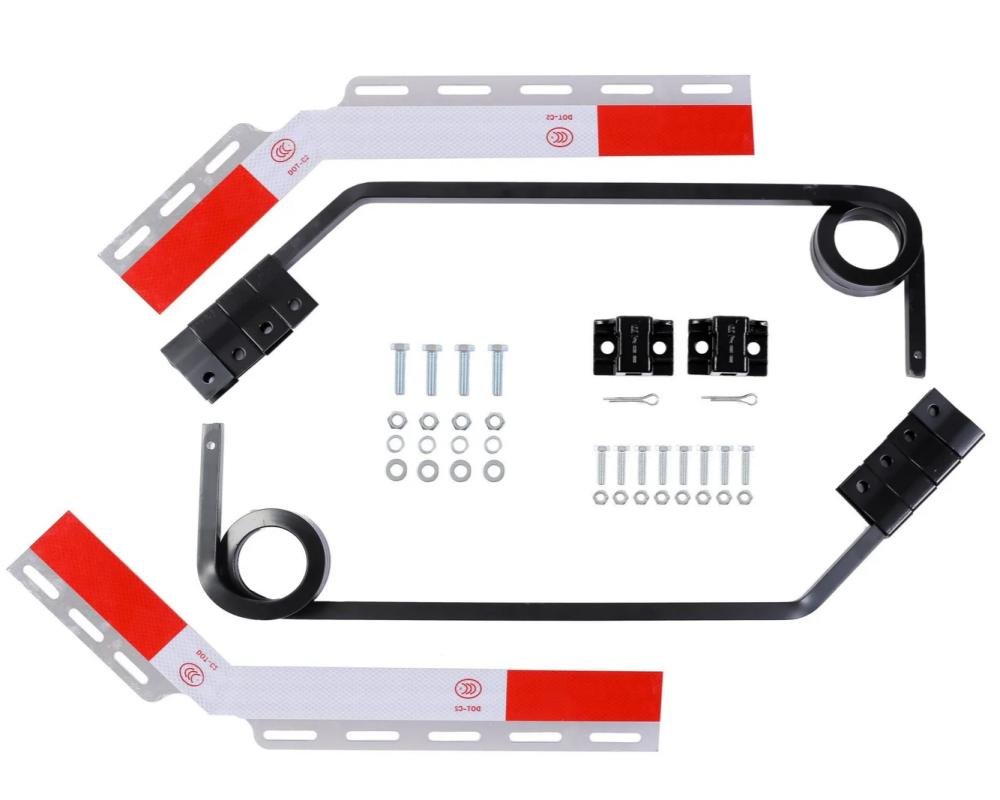
Mud flaps cannot stay compliant if the mounting system is weak. A flap that swings too much, sits crooked, or drops after a short period creates the same operational problem as a worn flap. This is why repair channels often pair flaps with heavy duty mud flap hangers and reflector plates.
US TRUCK GOAT supplies truck fenders and accessories for wholesale customers in North America and Europe, with product families that include mud flap hangers, mud flap strips, quarter fenders, and related replacement hardware. The range gives distributors and repair shops a way to match the compliance conversation with parts that fit common service needs.
Summary
Mud flaps are required or inspected through a mix of vehicle equipment rules, state requirements, and practical road-safety expectations. The useful decision for trade buyers is to stock parts that keep splash control, mounting security, and rear visibility in acceptable condition across the truck types they serve.
If your customers need a clearer stock plan for flaps, hangers, and reflectors, you can discuss fitment and stock planning with a product team that understands wholesale truck accessory supply.
FAQ (häufig gestellte Fragen)
Are mud flaps required on semi trucks?
Semi trucks often need mud flaps or similar splash-control equipment, but the exact wording depends on vehicle type and state rules. Buyers should confirm the operating states before relying on one universal answer.
Are mud flaps a DOT requirement?
DOT-related inspections can address vehicle condition and safety equipment, but many mud flap dimensions are handled through state rules. Treat DOT compliance and state mud flap requirements as connected but not identical.
Can damaged mud flaps fail an inspection?
Damaged mud flaps can create inspection or service problems when they no longer cover the tire area, hang loosely, or lose required supporting hardware. Replacement should include the flap and any failed mounting parts.
Do trailers need mudguards?
Many trailers need mudguards or mud flaps because rear tires can throw spray and debris. Trailer length, axle position, and state requirements affect the final answer.
What should wholesalers stock for mud flap compliance?
Wholesalers should stock common flap sizes, mud flap hanger sets, mud flap strips, reflector plates, fasteners, and anti-sail accessories. A practical mix helps repair shops solve inspection-driven repairs quickly.
Neueste Beiträge

Are Mud Flaps Required on Trucks in the U.S.?
Oktober 15, 2026