

In real fleet operations, mud control is not only about keeping the truck clean. It directly affects rear visibility, corrosion protection, and maintenance frequency. This is where angled mud flaps for semi trucks create a clear performance difference compared with traditional flat systems.
Why angled mud flaps matter for splash control in real driving conditions
Angled mud flaps are designed to change how water, mud, and debris behave after leaving the tire contact zone. Instead of letting the spray move straight backward, the angled structure redirects flow downward and outward, reducing concentrated rear splash impact.
A standard semi–truck mud flap mainly works as a vertical barrier. While it blocks debris, it does not actively control direction. In contrast, angled geometry introduces a deflection path that reduces turbulence behind the tire.
This difference becomes more obvious in high-speed highway driving or wet road conditions, where water dispersion is stronger and more chaotic. By controlling flow direction, angled systems reduce the density of spray hitting following vehicles.
How angled design improves deflection, side protection, and rear coverage
The core advantage of angled mud flap systems is not appearance—it is fluid direction control.
First, mud and water deflection improve because the flap is not perpendicular to the tire. The angle creates a guiding surface that pushes debris downward instead of allowing it to rebound directly backward. This reduces the “spray cone” effect that is common with flat flaps.
Second, side protection improves significantly. When a truck turns or changes lanes, tire spray often escapes laterally. Angled mud flaps reduce this lateral escape by extending coverage toward the wheel arch direction, limiting splash onto fuel tanks, side skirts, and suspension components.
Third, rear coverage becomes more stable. Instead of a single impact zone behind the tire, angled designs spread the discharge pattern across a wider area. This reduces concentrated dirt accumulation on trailers and improves visibility for trailing traffic.
In long-distance transport, these improvements translate into lower cleaning frequency and reduced corrosion risk on exposed components.
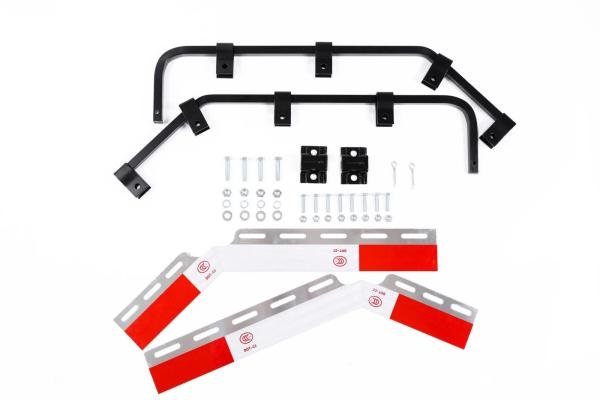
Structural comparison: flat vs angled vs hanger-mounted systems
Different mud flap structures serve different operational needs. The table below summarizes practical application differences based on fleet and repair shop usage scenarios.
| Type | Splash Control Behavior | Stability at High Speed | Installation Complexity | Best Application Scenario |
| Flat mud flap | Direct downward blocking, limited deflection | Medium | Low | Budget fleets, low-speed logistics |
| Angled mud flap | Directed flow deflection, reduced spray cone | High | Medium | Highway transport, mixed road conditions |
| Hanger-mounted flap | Flexible positioning with bracket support | High (depends on bracket) | Medium to High | Heavy-duty fleets, replaceable systems |
Flat designs remain common due to low cost, but they lack directional control. Hanger-mounted systems offer structural flexibility, especially when paired with reinforced brackets, but rely heavily on installation precision.
Angled systems balance performance and simplicity, making them increasingly preferred in wholesale and maintenance markets.
Product integration and B2B application from US TRUCK GOAT
Our manufacturing system covers both mud flap materials and structural hanger components, allowing buyers to build complete rear protection systems rather than single parts. The supply chain is designed for wholesale distribution with consistent batch quality and stable pricing.
From our catalog, angled solutions are supported by multiple structural components, such as:
- Angled Heavy Duty Mud Flap Hanger Set | XKJ-MFH-01-SS-1/8
- Angled Mud Flap Hanger Bracket | XKJ-MFH-01-SS-1/2
- Angled Mud Flap Support Bar Fit for Semi-Trailers | XKJ-MFH-S2C
- Pair of Angled Bar Truck Hangers with Reflector Plates | XKJ-MFH-Q3C
These products are designed for heavy-duty installation environments with net weights ranging from 6.6 kg to 9.1 kg per set, ensuring stability under vibration and road impact conditions.
Reflective integration is also available in selected configurations, supporting reflective mud flaps for improved night visibility and rear recognition.
For bulk orders or technical matching, we provide direct support and quotation response through our factory channel.
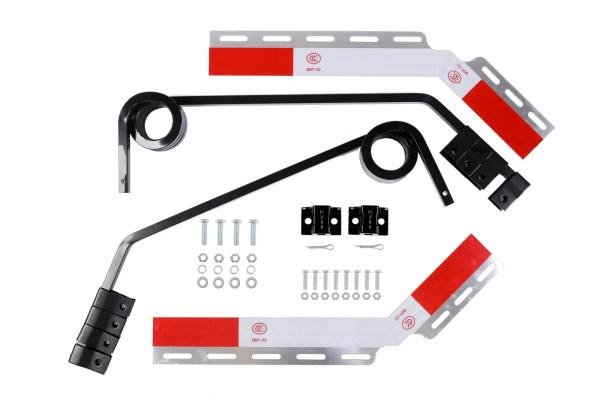
Installation efficiency and maintenance considerations for repair shops and wholesalers
For repair shops, installation time and compatibility are critical. Angled systems reduce alignment errors because the bracket geometry naturally guides positioning during mounting.
In practical workshop conditions, flat flaps often require manual adjustment after installation due to inconsistent droop or misalignment. Angled brackets reduce this issue by maintaining a fixed directional structure.
Maintenance teams also benefit from longer service intervals. Because debris is redirected rather than concentrated, wear distribution across the flap surface becomes more even. This extends replacement cycles, which is important for fleet cost control.
From a wholesale perspective, angled systems also simplify SKU bundling. Hanger, bracket, and flap sets can be packaged as modular units, reducing inventory complexity for distributors.
Performance impact in real fleet environments
In highway transport, splash control is not only about cleanliness. It directly affects sensor visibility, lighting systems, and following vehicle safety.
Angled mud flaps reduce the likelihood of rear spray interference with brake lights and reflective markings. When combined with semi-truck mud flap systems that include reinforcement layers, overall road visibility improves significantly.
In wet or muddy construction zones, angled systems also reduce buildup around axle components. This helps reduce mechanical stress caused by hardened debris accumulation.
Conclusion
Angled mud flap systems are not just a design variation. They represent a functional improvement in splash control, especially for fleets operating in mixed or harsh road environments. By combining directional deflection, side protection, and improved rear coverage, they deliver a more stable protective layer than flat configurations.
At US TRUCK GOAT, we support wholesale buyers and repair networks with structured mud flap and hanger systems designed for real operational demands. Whether you are sourcing angled mud flaps for semi trucks or upgrading existing semi-truck mud flap systems with better splash control performance, we provide stable production, competitive pricing, and consistent export supply.
For quotation, technical support, or bulk procurement planning, visit US TRUCK GOAT website.
FAQ
What is the main advantage of angled mud flaps compared to flat ones?
They control direction instead of only blocking debris. Angled designs redirect water and mud downward and outward, reducing rear spray concentration and improving overall splash dispersion.
Are angled mud flaps suitable for all semi truck models?
They are compatible with most heavy-duty configurations. Most modern truck frames and trailer systems can accommodate angled brackets, especially when using standardized hanger systems.
Do angled mud flaps improve safety at night?
Yes, especially when combined with reflective elements. When paired with reflective inserts or strips, angled systems improve visibility in low-light and highway conditions.
What industries benefit most from angled mud flap systems?
Long-haul logistics and construction transport often benefit most. These environments involve high splash exposure, making directional control more valuable than basic blocking systems.
Can angled mud flaps reduce maintenance costs?
Yes, by reducing corrosion and cleaning frequency. Less concentrated spray means lower buildup on chassis and components, reducing long-term cleaning and repair frequency.
Recent Posts

Are Mud Flaps Required on Trucks in the U.S.?
October 15, 2026