

Rear visibility is one of those details that looks small until a fleet has to manage it at scale. The real decision is rarely just whether a truck has reflectors; it is whether the part uses a plate, tape, or hanger-mounted strip that fits the trailer, the truck body, and the maintenance process.
Why reflective hardware matters on the rear end
A reflective mud flap part does two jobs at once. It supports the rear hardware visually by making the truck easier to notice, and it gives the buyer a clearer path for matching the rear-end spec to a fleet standard. That matters when the order has to serve road visibility, replacement planning, and warehouse simplicity at the same time.
If your fleet spec references DOT mud flap requirements or trailer conspicuity, the useful question is not only what looks reflective. It is whether the rear part stays readable in traffic, survives handling, and remains easy to reorder without changing the whole assembly.
For buyers comparing parts families, a clear truck accessory catalog is easier to work with than isolated pieces because it shows which reflector parts already belong to the same product system.
Plate, tape, and hanger-mounted reflector options
Aluminum reflector plates are the cleanest replacement
Aluminum reflector plates are the simplest way to add a visible rear finish when the buyer wants a neat, plate-style part. They suit trailer applications well because the hardware is compact, the pack is light, and the replacement logic stays straightforward. In the current range, the lightest plate-style parts are easy to handle in bulk and still give the rear assembly a clear reflective face.
Hanger-mounted reflector tape keeps the assembly integrated
Hanger-mounted reflector tape makes sense when the buyer wants the reflector to travel with the hanger instead of living as a separate add-on. That is useful for mixed fleets because the shop is replacing one assembly rather than balancing several small pieces. It is also the better answer when the rear-end spec wants the reflector to stay aligned with the same bracket line as the flap.
Integrated hanger and reflector sets reduce part count
Integrated sets are the easiest way to standardize because the hanger, plate, and reflective strip are already grouped. That reduces the number of decisions the buyer has to make on each reorder and helps warehouse teams keep the same part logic from one truck type to the next.
- Use a plate when the customer wants a simple reflective finish with low part complexity.
- Use tape on the hanger when the rear assembly must stay compact and visually consistent.
- Use an integrated hanger set when the order should minimize loose components and simplify reordering.
- Keep the reflector style matched to the flap family so the rear end reads as one system, not three unrelated parts.
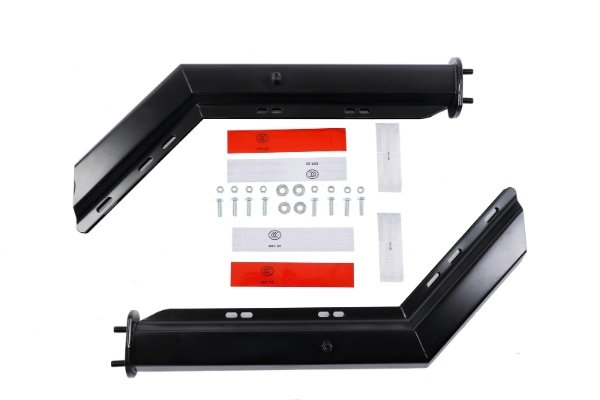
What to compare before ordering
| Product family | SKU / example | Pack and weight | Buyer note |
| Aluminum Alloy Reflector Plates for Trailer | XKJ-MFS-Q24AL | 0.5 kg net and gross; PE bag | Lightweight plate-style replacement for trailer use |
| Aluminum Mud Flap Hanger Reflector Plate for Semi Truck | XKJ-MFS-S24AL | 0.4 kg net and gross; PE bag | Compact reflector plate for semi-truck hardware |
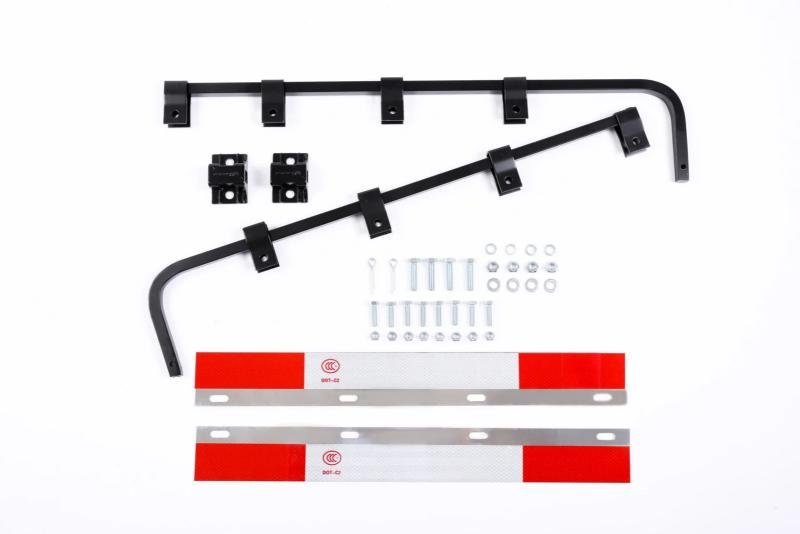
| Black Mud Flap Hanger Set with Reflector Tape | XKJ-MFH-03-1/8 | 8.3 kg net, 8.8 kg gross; 81.5 x 27.5 x 10.5 cm | Integrated hanger and tape solution |
| Mud Flap Hangers Bracket With Reflector Plates | XKJ-MFH-QBK | 5.54 kg net, 5.88 kg gross; 80 x 20 x 5.4 cm | Bracket set with reflector plates already built in |
The next decision is whether the reflector should live on the plate, the hanger, or the strip itself.
The most common buyer mistake is to compare reflectivity without comparing the mounting format. A mud flap hanger range tells you whether the plate is meant to travel with the hanger, while the strip family shows whether the reflective face belongs on the flap itself.
How this fits a fleet sourcing list
The reflected finish, the hanger body, and the strip options sit in one accessory range, so customers can keep the order coherent instead of rebuilding the rear end one loose part at a time. US TRUCK GOAT keeps that family logic together when the reflector spec has to stay aligned across reorders.
The truck mud flap strip line helps when the reflector part is only one half of a larger rear assembly and the fleet wants the visual finish to stay uniform.
The reflected finish, the hanger body, and the strip options sit in one accessory range, so customers can keep the order coherent instead of rebuilding the rear end one loose part at a time.
Summary
The right reflector part is the one that matches the truck body, the hanger family, and the way the fleet reorders hardware. Plate-only parts are the simplest to replace, hanger-mounted tape keeps the assembly compact, and integrated reflector sets reduce the number of loose pieces in the supply chain. Once the buyer chooses the mounting format first, the rest of the order becomes far easier to standardize.
If you need help matching a reflector set to a hanger family, contact US TRUCK GOAT.
FAQ
What is the difference between a reflector plate and reflective tape?
A plate is a compact mounted part, while tape creates the reflective face directly on the hanger or flap surface.
When does an integrated hanger with reflector tape make more sense?
It makes sense when the fleet wants fewer separate parts and a rear assembly that stays visually consistent through reorders.
How should buyers compare PE-bag parts against carton-packed hanger sets?
Compare pack style with usage frequency and freight handling; light plate parts move differently from heavier hanger sets.
Which part families are easiest to standardize across a mixed fleet?
The easiest families are the ones that keep the same mounting pattern, the same finish, and the same carton profile across reorders.
What should a wholesaler confirm before reordering DOT-C2 reflective hardware?
Confirm the mounting format, reflectivity style, and whether the part is a plate, tape, or integrated hanger set before you repeat the order.
Recent Posts

Mud Flap Reflectors and DOT-C2 Plates: Buyer Guide
September 17, 2026