
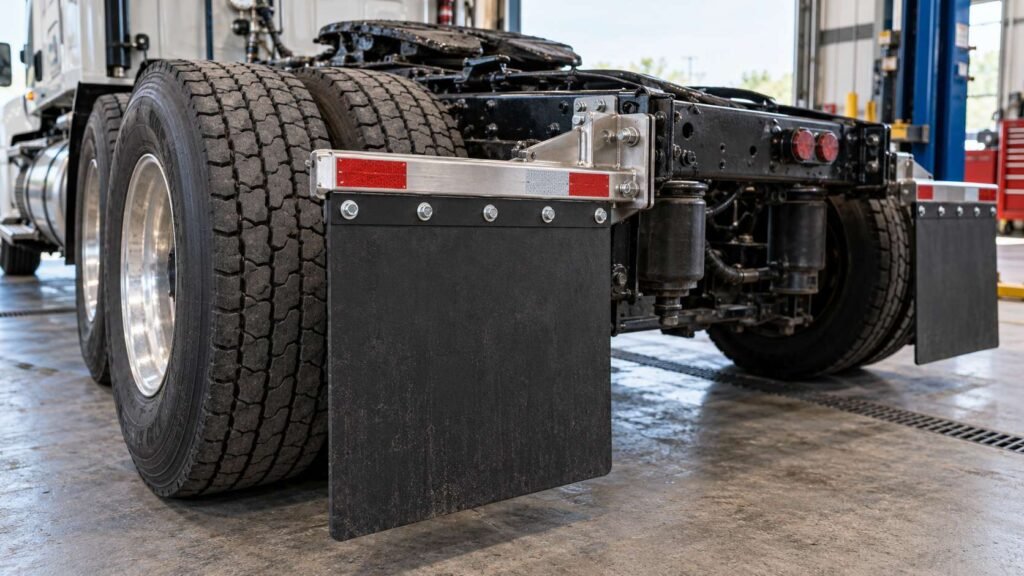
Semi truck mud flap hangers look like simple support bars until a repair bay is waiting for the right one. The wrong angle, bracket style, or hardware pack can turn a flap replacement into a fitment problem. For repair shops and distributors, the useful stock choice is a focused range that covers common layouts without filling shelves with parts that rarely move.
Hanger Style Shapes the Repair
Mud flap hangers support the flap, set its position, and keep the rear splash-control system stable. A buyer comparing US TRUCK GOAT mud flap hangers has to look beyond the finish. The hanger style affects clearance, installation time, reflector placement, and the way the flap behaves when the truck starts vibrating down the road.
Straight, angled, tapered, black, stainless, and reflector-equipped hanger sets each solve a different repair problem. A shop that handles mixed semi truck work usually needs more than one style. It does not need every variation in equal quantity, and that is where stock discipline starts.
Straight hangers
Straight hangers suit many standard replacement jobs because they provide a simple support line behind the wheels. They are the practical choice when the original fitment is straightforward and the repair goal is to restore a familiar setup quickly.
Angled hangers
Angled hangers help when vehicle geometry or splash control calls for a different flap position. They also help shops match an existing setup on trucks that arrive with angled support bars already installed.
| Style | Best use | Wholesale note |
| Straight bar | Standard replacement on familiar layouts | Good baseline stock item |
| Angled bar | Fitment where flap position needs offset | Useful for semi truck variety |
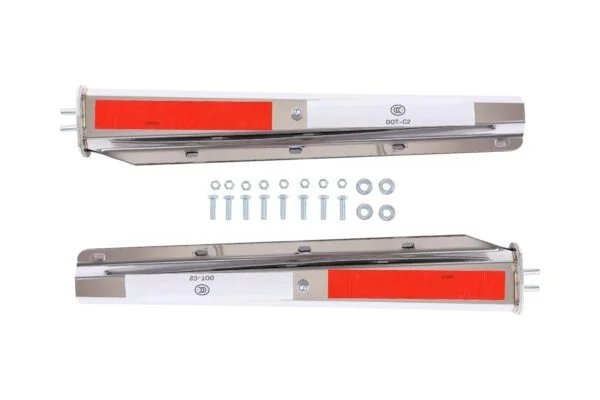
| Reflector-equipped | Rear visibility plus support | Pairs hardware with conspicuity demand |
| Anti-sail support | Reducing flap movement | Helpful for fleets focused on service life |
Fitment Clarity Reduces Counter Mistakes
Fitment mistakes often start with vocabulary. One customer asks for a hanger, another says bracket, and another says holder. The order still has to land on the correct physical set: bar, bracket, fasteners, reflector pieces, or anti-sail support.
A reliable stock conversation around semi truck mud flap hangers for repair stock starts with truck type, existing hanger shape, finish preference, and reflector needs. These questions sound basic. They prevent many returns because they force the buyer to describe the failed part before choosing the replacement.
- Ask whether the original hanger is straight, angled, or tapered.
- Confirm whether the customer needs a pair or one side only.
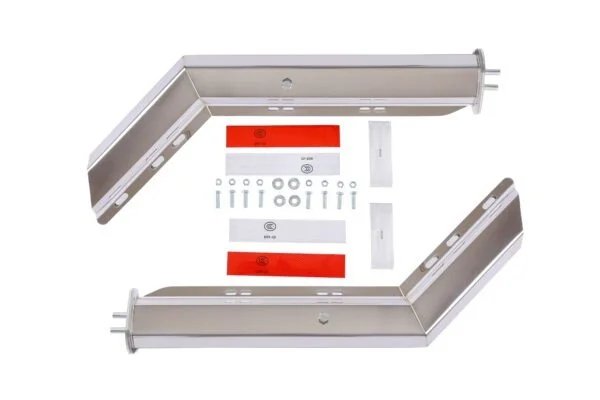
- Check whether reflector plates, strips, bolts, and washers are included.
- Match finish expectations, such as black coated or stainless appearance.
A Useful Stock Mix Covers Failure Points
A good hanger inventory should follow the failures repair shops actually solve. Bent bars, missing bolts, damaged reflectors, and worn bracket points are practical reasons for replacement. Stocking only the visible bar can leave the shop short of the small hardware that finishes the job.
US TRUCK GOAT product families include mud flap hanger sets with different weights, carton sizes, reflector options, and support-bar shapes for North American truck accessory demand. This helps distributors build a compact range that still answers common repair needs.
Inventory depth should reflect how customers buy during downtime. A repair counter may lose the sale when it can offer the main hanger but not the strip, bolts, or matching opposite side. A small number of complete combinations can work harder than a large number of partial items because the buyer can finish the repair in one visit.
Fast-moving repair items
Fast-moving repair items usually include common black hanger pairs, straight support bars, angled sets, and reflector-equipped hangers. These are the parts shops want when a truck cannot wait for a slow special order.
Supporting hardware
Supporting hardware matters because small missing parts can stop an otherwise correct repair. Bolts, washers, strips, and reflector pieces should be treated as part of the solution rather than afterthoughts.
Package clarity is another quiet advantage for wholesalers. Net weight, gross weight, carton dimensions, finish, side count, and included pieces help warehouse teams quote freight, prepare shelf labels, and answer repair-shop questions without opening the carton again.
Reflector Options Add Practical Value
Reflector-equipped hangers can reduce the number of separate parts a buyer must coordinate. For fleets and repair shops, combining rear support with reflective components makes replacement cleaner when rear visibility is part of the service concern.
A category plan that includes truck mud flap brackets and holders gives the counter team better language for customers who are not sure what failed. Clear naming and visible product photos can turn a vague request into the right order before the wrong carton leaves the warehouse.
Summary
Semi truck mud flap hanger selection should begin with repair reality: original style, side count, finish, included hardware, and reflector needs. Distributors that stock a practical mix can support repair shops faster while avoiding an inventory wall of low-demand variations.
For a focused wholesale range, you can compare hanger styles for your market and match common semi truck repairs with suitable hanger sets.
FAQ
What are mud flap hangers used for?
Mud flap hangers hold the flap in the correct rear position and support it through vibration, weather, and road movement. They are part of the full splash-control system.
Are semi truck mud flap hangers sold in pairs?
Many hanger sets are sold in pairs because rear service often needs matching left and right support. Buyers should confirm the package before ordering replacement stock.
What is the difference between a hanger and a bracket?
A hanger usually refers to the support bar assembly, while a bracket can describe the mounting piece or related support hardware. Customer wording varies, so fitment details matter.
When should mud flap brackets be replaced?
Mud flap brackets should be replaced when they are bent, loose, corroded, cracked, or unable to hold the flap squarely. Weak brackets shorten the life of the new flap.
Do reflector-equipped hangers replace reflective tape?
Reflector-equipped hangers can add rear visibility, but they should not be treated as a substitute for required trailer conspicuity markings. Fleets still need to follow the rules for the vehicle.