
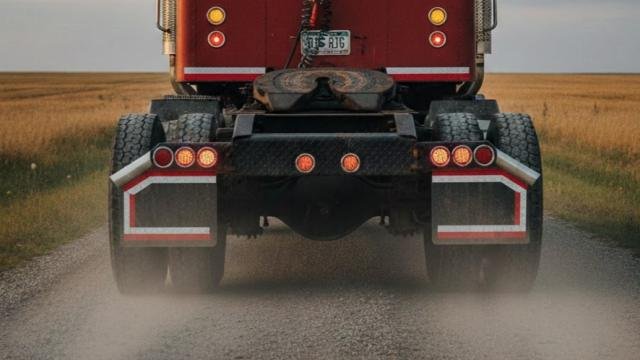
Running a business fleet means more than just keeping motors working. It calls for careful attention to safety parts that guard the truck and other road users. Mud flaps, also called splash guards, rank among the key but often ignored items. Knowing the legal mud flap height and setting them up right is key to following rules and keeping roads safe.
The Importance of Mud Flap Height and Functionality
Mud flaps act as the first barrier against road litter. A big truck moving fast can kick up rocks, water, and dirt with great power from its wheels. If guards sit in the wrong spot, these bits can break the glass on cars behind or block sight for drivers with too much water spray.
At US TRUCK GOAT, we have focused on strong truck fenders and parts since 2000. Our team brings more than 20 years of experience in this field. We know lasting strength matters most. Our items hold up well in tough spots. This keeps your group of trucks in line with laws and secure no matter the setting.
Federal vs. State Regulations: Navigating the Legal Landscape
To figure out what are the regulations on the height of splash guards, you need to tell apart national rules and state ones. The Department of Transportation (DOT) and the Federal Motor Carrier Safety Administration (FMCSA) set broad safety guides. Yet, the dot mud flap height details often come from each state.
General DOT Standards
The FMCSA calls for all business motor vehicles to have gear that stops “road splash” and junk from flying back. But they usually leave the exact how high should mud flaps be off the ground to the states.
Common State Variations
Many states stick to a “6-inch to 8-inch” guide. Some permit more space above. Here are examples:
- The 8-Inch Standard: Plenty of areas say the lower part of the mud flap must stay no over 8 inches from the road when the truck has no load.
- The 1/3 Rule: Certain states want the mud flap to shield at least the upper third of the back wheels. Or it should reach a spot no more than 10 inches from the ground.
Not meeting the mud flap height requirement in a certain state brings “fix-it” tickets. It can also mean fees and CSA (Compliance, Safety, Accountability) marks. These hurt a fleet’s safety score.
Technical Specifications: Measuring Mud Flap Height From Ground
For your truck to follow rules, check the mudflap height from ground on flat ground. Take the measure from the bottom rim of the flap to the road surface.
Ground Clearance and Weight Factors
A usual error in truck care is checking height just with an empty trailer. When full, the springs sink down. This pulls the mud flaps nearer to the pavement.
- If the flap sits too low: It might scrape the road, especially when going backward over edges or rough paths. The wheel can catch it against a curb. This often tears the holder bracket clean off.
- If the flap hangs too high: It misses junk on the road. That breaks the legal mud flap height. It raises the chance of blame for broken glass on cars following.
Product Weight and Dimensions
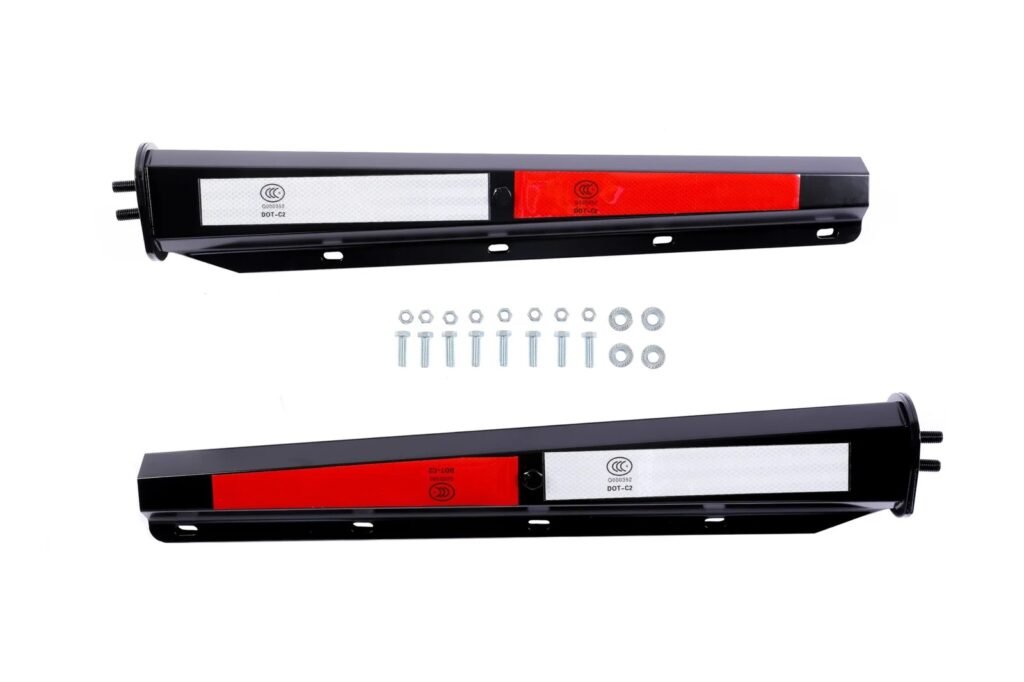
Picking the best fittings matters for keeping the right height. US TRUCK GOAT has many types of holders and flaps. They match weights and sizes to various truck setups. Take our Angled Heavy Duty Mud Flap Hanger Set (SKU: XKJ-MFH-01-SS-1/8). It gives a solid base with a net weight of 9.1 kg. This holds steady against strong winds.
Selecting the Right Equipment for Compliance
A splash guard works only as well as its support gear. A drooping or twisted holder can drop a mud flap out of the needed height zone.
Mud Flap Hanger Options
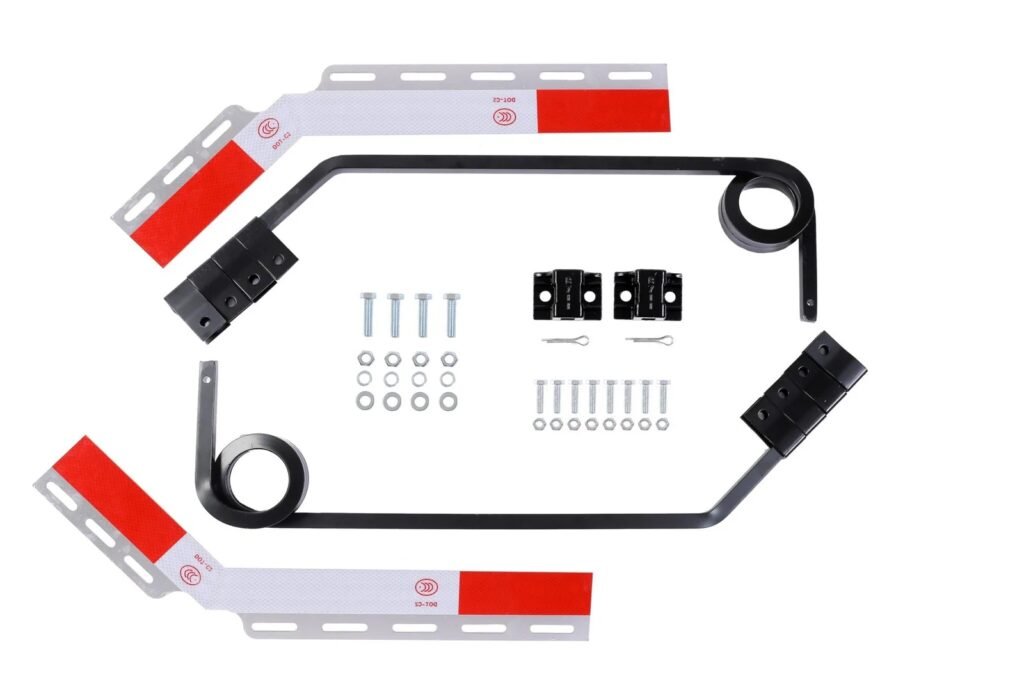
We supply varied choices fit to each need. These include slanted and upright bar styles.
Angled Hangers: Truckers often pick these for tough semi-trailers. They offer extra room below and blend with the look. Items like the XKJ-MFH-S2C (7.55 kg) suit semi-trailers well.
Straight Bar Brackets: These fit basic uses. They need a straight drop to hit the mud flap height requirement.
Material Durability
Our info covers stuff like Aluminum Alloy (SKU: XKJ-MFS-Q24AL) and Stainless Steel picks. Folks like aluminum for fighting rust and its light build. This stops the drop that comes with heavy, cheap parts after a while.
| Product Type | SKU | Net Weight (per set) | Best Use Case |
| Angled Heavy Duty Hanger | XKJ-MFH-01-SS-1/8 | 9.1 kg | High-durability semi-truck use |
| Straight Bar Bracket Kit | XKJ-MFH-SBK | 5.54 kg | Standard black straight bar applications |
| Quarter Fender Set | XKJ-QFS24BKLS | 7.07 kg | Comprehensive wheel coverage |
| Aluminum Reflector Plate | XKJ-MFS-Q24AL | 0.5 kg | Enhanced visibility and safety |
Innovation in Safety: Reflectors and Visibility
Following the rules goes beyond height. It means getting noticed. Newer laws and careful fleets use shine plates and strips to boost the view of the truck’s back edge.
Our Aluminum Mud Flap Hanger Reflector Plates (SKU: XKJ-MFS-S24AL) fit smoothly with our holder sets. Plus, we sell kits like the XKJ-MFH-03-1/8. These come ready with shine tape. This two-way plan helps meet dot mud flap height rules and national sight needs.
Why Quality Hardware Matters for Long-Term Compliance
At US TRUCK GOAT, we stand for top work. We serve North America and Europe with fine goods. Our solid links to suppliers and modern manufacturing tools let us keep steady quality. Wholesalers and firms count on that.
Pick a teammate with over 20 years in the work. You put money into items that cut down on fix visits. Strong parts keep your mud flaps at the legal mud flap height for longer. They stand up to shakes and weather strains from long trips.
Frequently Asked Questions
What is the standard mud flap height for a semi-truck?
While it varies by state, the most common mud flap height requirement is that the bottom of the flap must be between 6 and 10 inches from the ground. Most safety experts recommend aiming for 8 inches to account for both loaded and unloaded states.
Can I be fined if my mud flap is too high?
Yes. Above ground, if a mud flap rises past the maximum allowed height – say 10 inches – it might draw attention under equipment rules. Citations can happen here, tied directly to how vehicles are set up. What looks right on site does not always match local regulations. Height matters more than function here, even if visibility isn’t the main concern. Rules shift by place, so placement checks matter too. Sometimes it’s not about protection but compliance when things get measured near roads.
Why do my mud flaps keep getting torn off?
This usually happens if the flaps are set too low. A heavy truck might have flaps hitting dirt when full. These parts could get torn if the wheel catches an edge – say near a wall or over uneven terrain. Damage often happens without warning, especially on tight corners or uneven surfaces.
Does the DOT require reflectors on mud flaps?
Federal regulations require trailers to have conspicuousness tape (reflective tape). While not always required on the flap itself, using a mud flap hanger set with reflector tape or aluminum reflector plates helps ensure your vehicle meets overall visibility standards.
How do I choose between an angled and straight mud flap hanger?
Hangers at an edge help keep things open or work with how trailers are shaped, whereas rigid rods stick to older methods. One thing matters – the type must pair up with flap size so height stays right.

