
DOT Compliance Checklist: Mud Flap Hangers on Semi Trailers
Understanding DOT Requirements for Mud Flap Hangers
What the DOT Expects from Mud Flap Hangers on Semi Trailers
To follow Department of Transportation (DOT) rules, mud flap hangers for semi trucks need to meet clear standards. First, these hangers must attach firmly and line up correctly. Any wobble or wrong position can lead to poor debris blocking. This might bring fines during checks.
Another key point is that mud flap hangers must stop road trash from flying behind the trailer. This matters for rules and safe driving. Trash from tires without a cover can cause wrecks or harm to other cars.
At last, the DOT requires mud flaps to span the whole width of the tire tread. This gives full guard and cuts the chance of trash flying into nearby traffic. So, make sure mud flap brackets for semi trailers hold mud flaps broad enough to match the full tire tread. This helps meet the rule well.

Common DOT Violations Related to Mud Flap Brackets
DOT officers often spot missing or broken mud flap brackets for semi-trailers during checks. These parts play a big role in holding mud flaps. Without them, flaps can drop or stop working properly.
Rusted, twisted, or snapped mud flap hangers show up as usual problems. Worn or weak brackets cut down on good work. They also risk coming loose while on the road.
Poor cover or the wrong spot for mud flaps can bring tickets, too. For example, a mud flap set too high from the ground breaks DOT rules. Or if it does not match the tire width, that counts as a fault.
Inspecting Your Mud Flap Hangers Before a DOT Check
Visual Inspection Tips for Mud Flap Hangers for Semi Trucks
A good check before your trip helps you skip fines. Start by looking at all bolts and screws on your mud flap hanger setup. They need to stay snug and clear of rust.
Then, look at the brackets’ shape. Make sure they show no splits, bends, or shakes. Try shaking them lightly with your hands. There should be no extra movement.
Finally, check that mud flaps sit at the right level and slant. They ought to hang straight and even on both trailer sides. Wrong flaps often point to old or bad hangers.
Signs That Your Mud Flap Brackets Need Replacement
Several clues say your mud flap brackets may need new ones. Too much rust or wear is a big warning. It cuts the strength and can lead to snaps later.
You can see splits or breaks in the hanger arms as another sure sign of trouble. These grow from road shakes, hits from trash, or metal tire wear over time.
Drooping or off-centre mud flaps often mean tired brackets. This happens when springs lose pull or holes get bigger from long use.
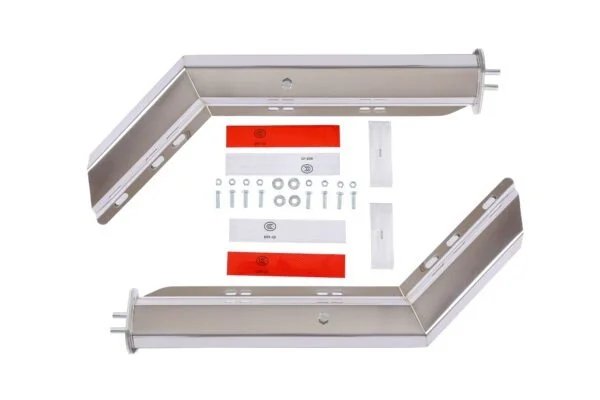
Think about swapping to a strong choice like the Angled Heavy Duty Mud Flap Hanger Set | XKJ-MFH-01-SS-1/8. It lasts long and keeps a good build.
Choosing the Right Mud Flap Hanger Setup for Compliance
Types of Mud Flap Hangers Used on Semi Trailers
Bolt-On Hangers
Bolt-on mud flap hangers win praise for simple setup. You can fix or change them without welding. This makes them great for fast fixes. Items like Black Straight Bar Mud Flap Hanger Bracket Kit | XKJ-MFH-SBK work well as bolt-on picks. They weigh only 5.54 kg net. Their box size stays small, too.
Weld-On Hangers
Weld-on hangers give extra toughness. They stick as a fixed part on your trailer. You need a pro to put them on. But they bring top strength and fight stress well.
Spring-Loaded Hangers
Spring-loaded hangers take in bumps from road hits. This helps keep harm away from mud flaps and brackets. They cut down on use and make things last longer. They suit long trips best.
Matching Your Truck’s Needs with Proper Bracket Selection
Pick a hanger by thinking of your trailer kind, wheel setup, and usual paths. For off-road or build sites, you need tough stuff that fights bends and rust.
Go for slanted brackets like Angled Mud Flap Hangers for Heavy Duty Semi Trucks | XKJ-MFH-Q1C. They push road trash away better. Plus, they give a strong hold in rough spots.
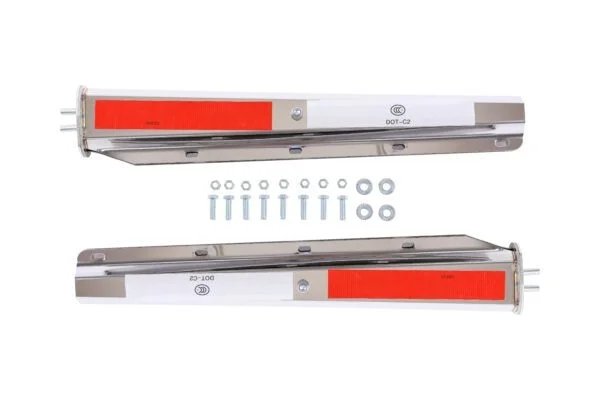
If you drive in cold areas with lots of salt, pick stainless steel ones like Mud Flap Hanger Bracket (Pair) | XKJ-MFH-02-SS-1/8. They stand up to rust more than painted steel picks.
Maintenance Tips to Stay DOT-Compliant Year-Round
Routine Care for Long-Term Durability of Mud Flap Hangers
Steady upkeep matters a lot for DOT rules. Wash your mud flap hangers often to clear dirt, salt, and junk that brings rust. In cold times, road salt speeds up rust if you do not rinse it quick.
Put oil on parts that move in spring brackets now and then. This keeps them bendy and stops them from sticking. A hard spring can cause wrong lines or a full stop.
If you use add-ons like reflector plates (e.g., Aluminum Mud Flap Hanger Reflector Plate for Semi Truck | XKJ-MFS-S24AL), fix them tightly and wipe them clean. This gives the best sight in dark checks.
Scheduling Regular Inspections with Preventive Focus
Add hanger looks to your before-trip check habit. A fast peek can show early wear or shifts.
Fix ahead beats fix in a rush. Change old parts before they quit. This keeps rules steady.
US TRUCK GOAT has many picks like the Mud Flap Support Bar For Semi Trucks | XKJ-MFH-S1C. They are fit for normal care and better steps.
At US TRUCK GOAT, we’ve been specializing in high-quality truck fenders and accessories since 2000. Our extensive lineup helps you stay compliant without compromising durability or cost-efficiency.
We are committed to excellence, serving the trucking industry with premium-quality products and exceptional service.
FAQ
How high should mud flaps be off the ground to pass DOT inspection?
Generally, DOT guidelines recommend mud flaps be no more than 8 inches above the ground when measured at the rear edge.
What’s the most durable type of mud flap hanger?
Weld-on hangers offer superior durability but require professional installation. Spring-loaded options also last longer under stress.
How often should I inspect my mud flap hangers?
Include them in your daily pre-trip inspections and perform a detailed monthly check for corrosion, wear, or loose fittings.
What causes mud flap hangers to break?
Common causes include road vibration, corrosion from salt exposure, improper installation, and impact from debris or backing incidents.
Can I replace just one side’s mud flap hanger?
Yes, but it’s recommended to replace both sides simultaneously to ensure balanced alignment and performance.
Recent Posts
January 26, 2026